
Our Commitment to the East Bay
EBS is proudly rooted in the East Bay. The rich and varied backgrounds, experiences, and stories of our students and families from Berkeley, Oakland, and their surrounding cities are at the heart of what makes our community so vibrant. There is no other place in the world where EBS could exist.
In recent decades, many East Bay communities have found themselves navigating powerful economic forces that have led to patterns of deep segregation in where families live and children attend school. These same forces have led to massive displacement, which has driven many families from the Bay Area altogether. The Urban Displacement Project, a UC Berkeley initiative that investigates “the nature of gentrification, and displacement, and exclusion in American cities,” has documented how these trends have impacted where people live in the East Bay at the neighborhood level and the resulting impacts on residents’ access to transit, medical care, and education.
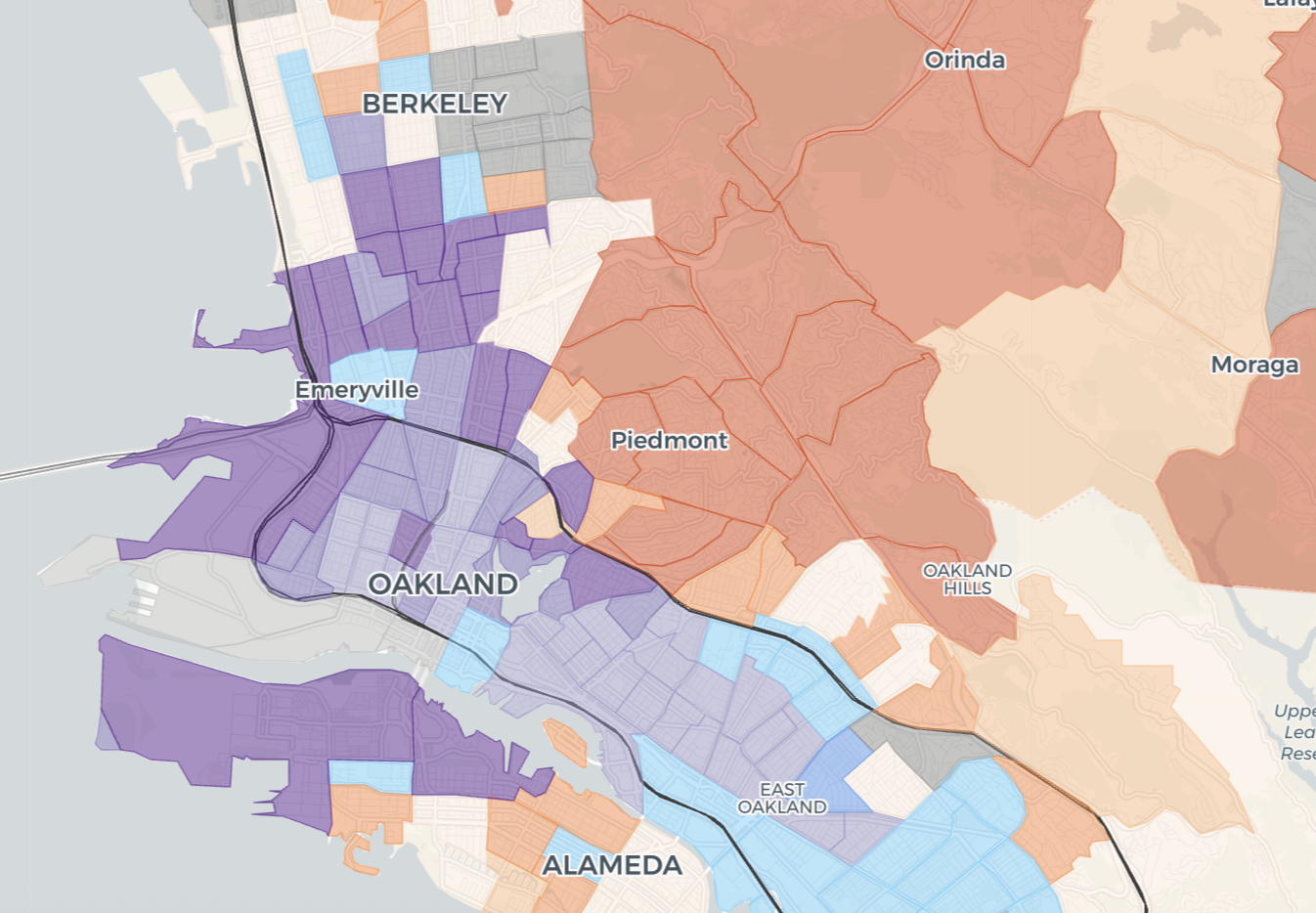
The neighborhoods in purple are in the process of advanced or ongoing gentrification, blue areas are experiencing ongoing displacement, and red areas are typified by advanced economic exclusion.
UC Berkeley researchers have determined that the historic legacy or redlining and the contemporary impact of gentrification and redlining have led Oakland to have the highest level of neighborhood segregation in the Bay Area. The Othering and Belonging Institute describes this curious - and painful - paradox: Oakland (and by extension, Berkeley) “is both highly diverse and extremely balkanized into racially identifiable neighborhoods.”
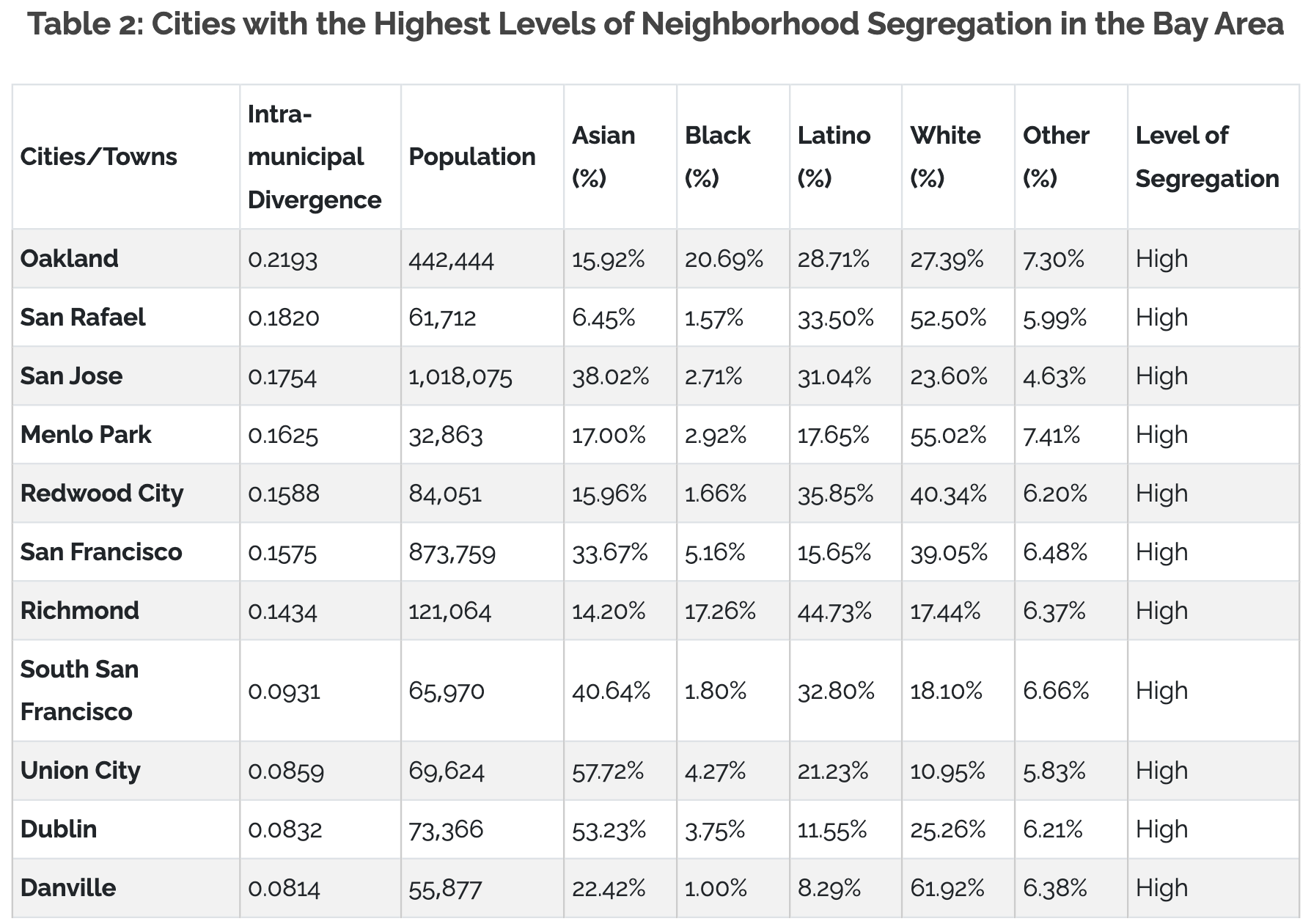
One tragic consequence of this economic and racial segregation is that there are many young people throughout our region - in some cases separated by mere blocks - who will never attend school together, play together, or hear each other’s stories. The East Bay is hardly alone in this regard. Cities across the United States and around the world find themselves grappling with enduring legacies of exclusion, disenfranchisement, and injustice.
At EBS, we understand that schools have a crucial role to play in restoring our social fabric, and we want to do our part to ensure that young people have the opportunity to learn together regardless of where they live or what their economic circumstances or racial background might be.
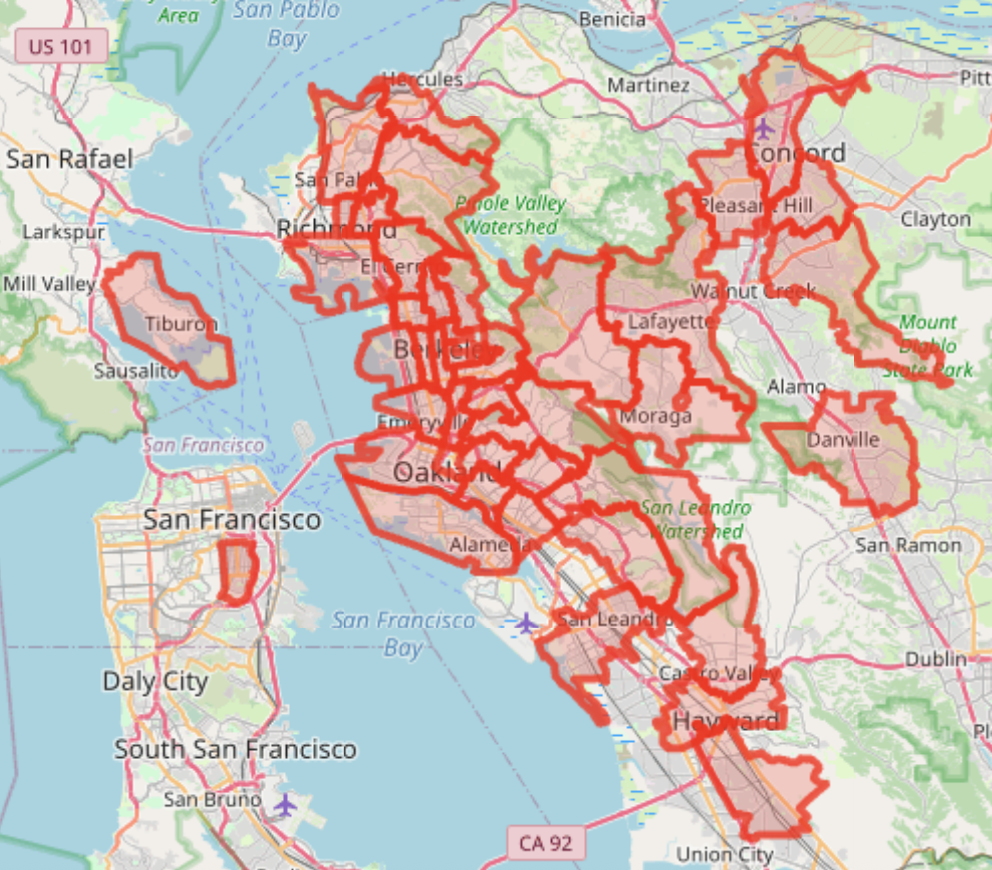
Over our 16-year history, EBS has welcomed families from all of the ZIP codes represented in this map, which includes the neighborhoods in Oakland and Berkeley most deeply marked by economic and racial segregation.
One of our most important institutional priorities is ensuring that no family finds itself unable to join the EBS community due to economic need. Over the last 16 years, we have created one of the most significant financial aid programs of any independent school in California. Over 50% of EBS’s revenue is earmarked for financial aid, and 75% of our families receive some level of tuition assistance. 83% of our financial aid recipients receive assistance that comprises 50% to 100% of the total tuition cost.
At EBS, we understand that our vision of creating a community rooted in belonging requires a deep understanding of the economic and racial history that has shaped our region and a focused and sustained response to the systems that divide our cities, neighborhoods, and families. We are fully committed to doing our part to ensure that young people from all over the East Bay have the opportunity to design, connect, and explore together at EBS. With support from community partners and donors, we hope to be able to expand these efforts over the coming years.